The 9th International Symposium on Edible & Medicinal Plant Resources and the Bioactive Ingredients Successfully Held in Kashi
Editor: | May 17,2026
The 9th International Symposium on Edible & Medicinal Plant Resources and the Bioactive Ingredients was successfully held in Kashi, Xinjiang, from May 9 to 10, 2026. The conference was chaired by Academician of the Chinese Academy of Engineering Haji Akber Aisa, Professor Karl Wah-Keung Tsim and Professor Guangmin Yao. The conference was jointly hosted by the Xinjiang Technical Institute of Physics and Chemistry, Chinese Academy of Sciences, The Hong Kong University of Science and Technology, Xinjiang Medical University, Kashi University and Uygur Medicine Hospital of Kashi Prefecture. It was jointly organized by the Shenzhen Key Laboratory of Edible and Medicinal Bioresources, the College of Chemistry and Environmental Science, Kashi University, the Central Asian Center of Drug Discovery and Development of CAS, and the China-Uzbekistan Belt and Road Joint Laboratory on New Drug. The conference was co-organized by Kashi Vocational and Technical College, Kashi Prefecture Hospital of Traditional Chinese Medicine, and the State Key Laboratory of Bioactive Molecules and Druggability Assessment, Jinan University.
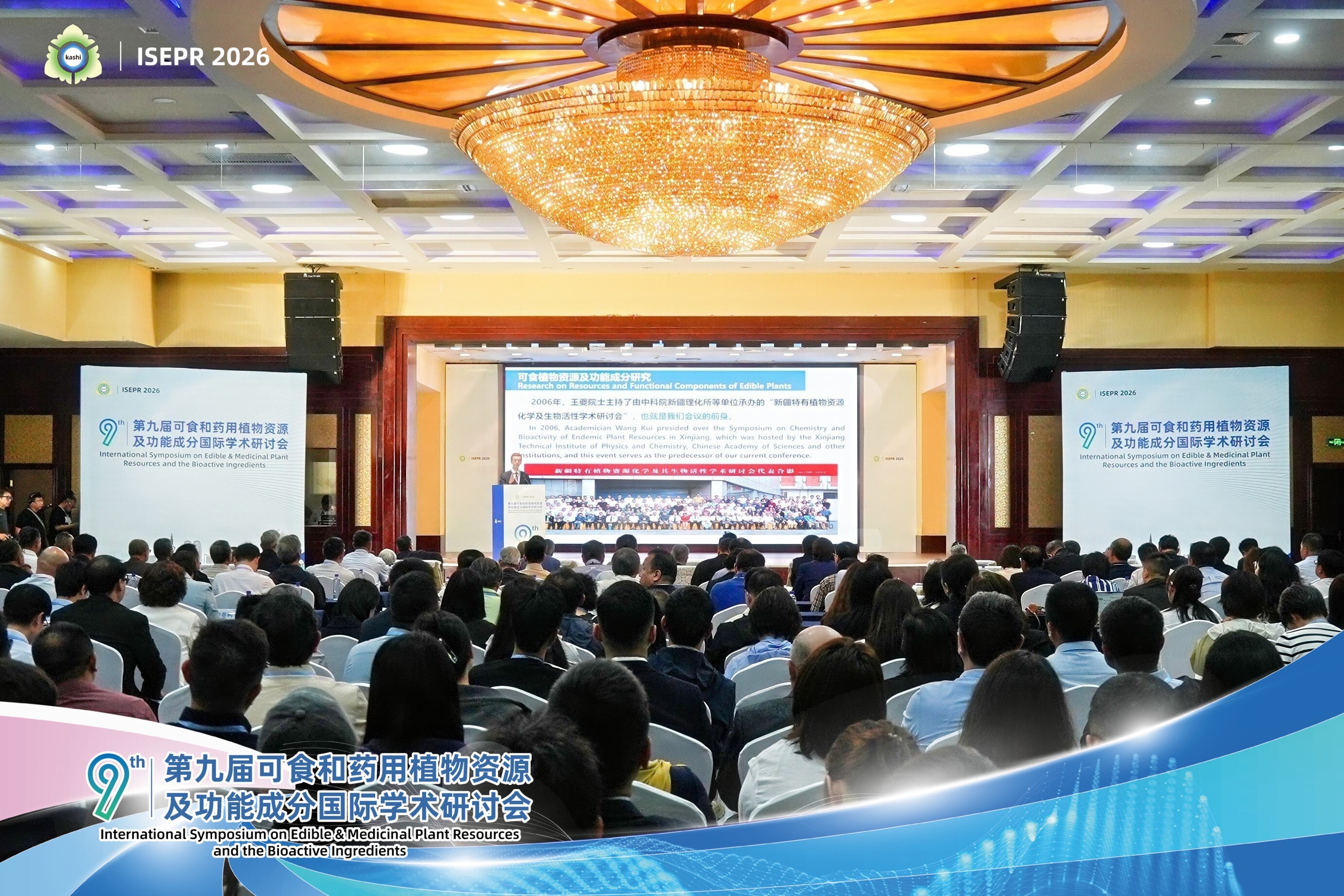
The conference held discussions in three parallel sessions simultaneously . It brought together more than 300 experts and scholars from the Chinese mainland, the United States, Germany, Uzbekistan, Kazakhstan, Tajikistan, Kyrgyzstan and Turkmenistan, as well as the Hong Kong, Macao and Taiwan regions of China. The symposium served as a platform for academic exchange and industry collaboration, bringing together expertise to support regional innovation and development.
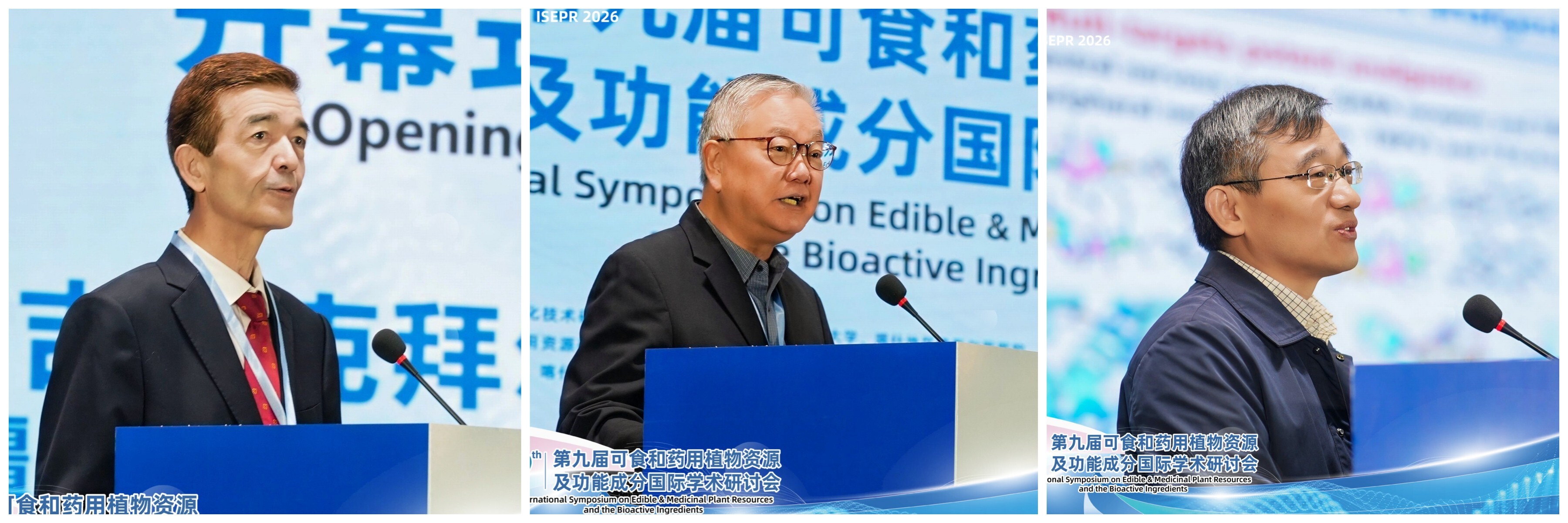
Conference Chairmen (from left: Academican Haji Akber Aisa, Prof. Karl Wah-Keung Tsim and Professor Guangmin Yao)
Over the two-day event, the symposium featured an academic program covering basic research, technological innovation and industrial application. A total of 87 presentations were delivered, including 11 invited lectures, 56 thematic presentations and 20 presentations by young scholars. The program covered three major areas: medicinal and edible plant resources and the development of specialty products, disease mechanisms and the intervention mechanisms of traditional Chinese medicine and the isolation, analysis and synthesis of bioactive compounds from traditional Chinese medicine, together with the application of emerging technologies. In-depth discussions on basic research and translational application helped connect fundamental discoveries, technological innovation and industrial development. The conference received 176 abstract submissions, which were compiled into a conference abstract book.
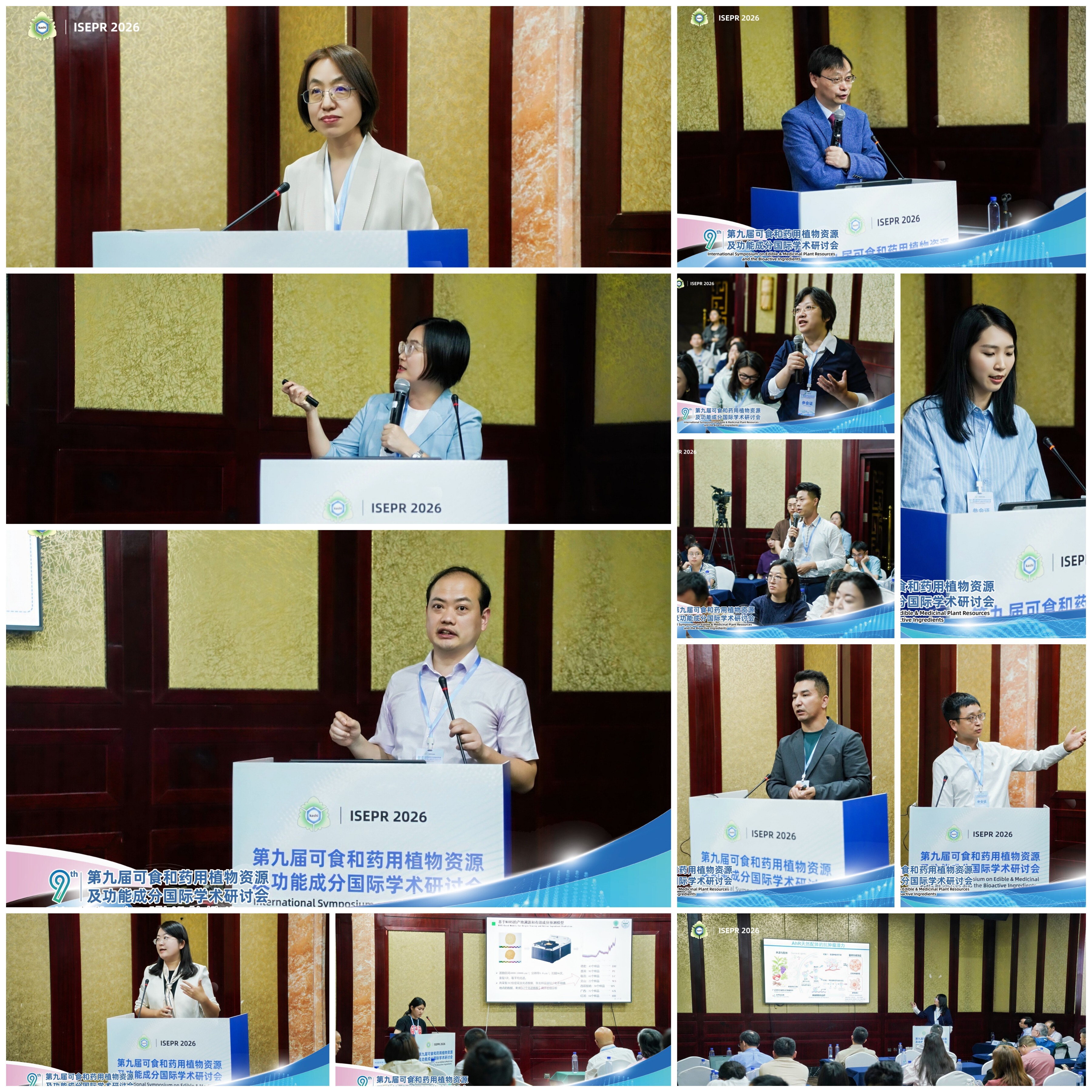
scientists presented on the Conference
To further promote the integration of industry-academia-research integration, the conference featured the Greater Bay Area Chinese Medicine Industry: Policy and Development Forum. Representatives from universities, research institutions and enterprises, including The Hong Kong University of Science and Technology and the Hong Kong Biomedical Innovation Association, gathered to discuss industrial coordination between the Guangdong-Hong Kong-Macao Greater Bay Area, central and western China, and Central Asia, adding a practical dimension to the symposium. As one of the core host institutions, The Hong Kong University of Science and Technology played an active role in the organization of the symposium and helped to promote the integration of academic exchange and industry engagement. Research teams from Central Asian countries presented their latest findings on distinctive plant resources, further strengthening the long-standing ties of scientific and technological cooperation under the Belt and Road Initiative.
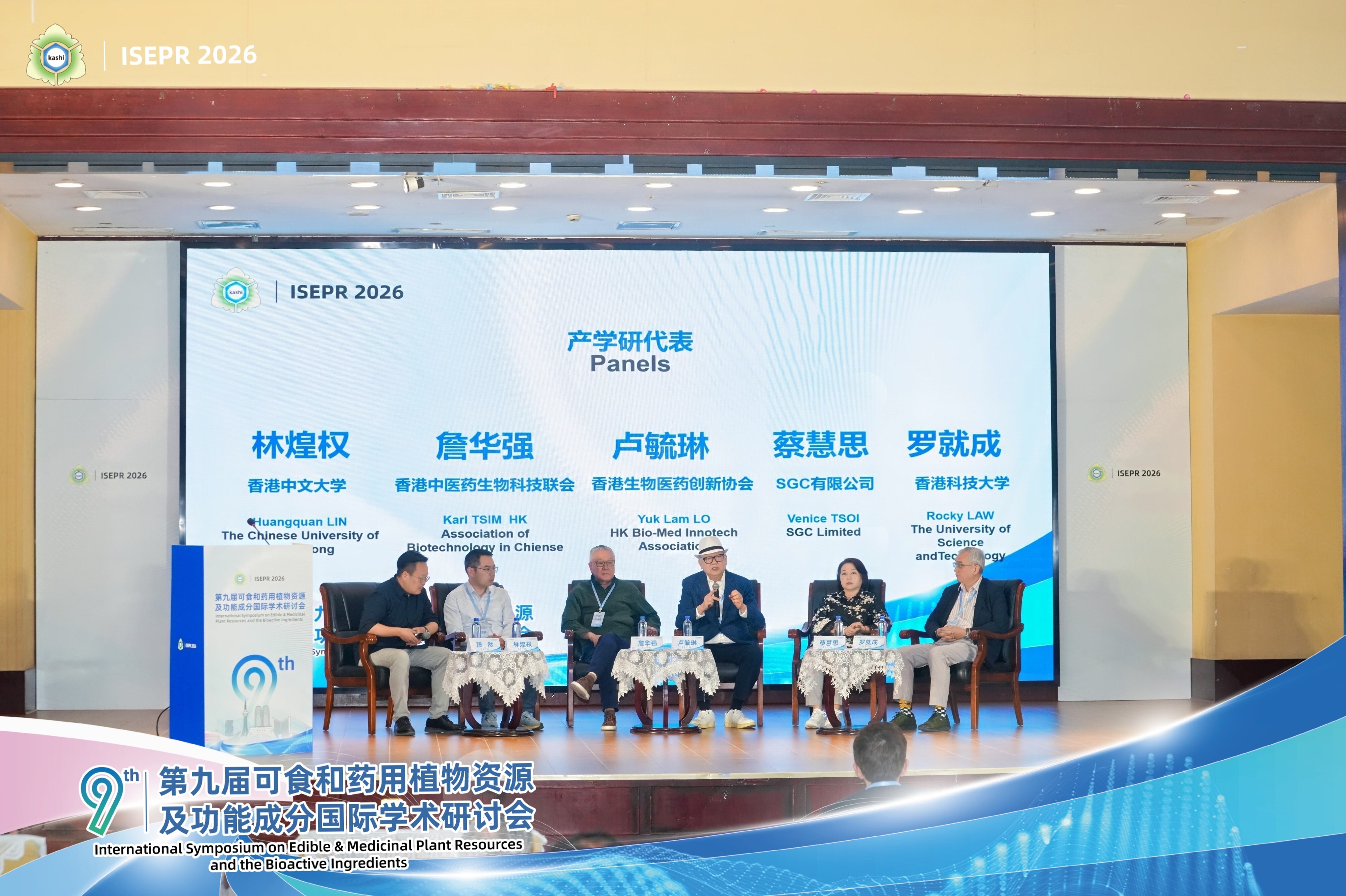
the Greater Bay Area Chinese Medicine Industry: Policy and Development Forum
With favorable sunlight, heat, water and soil conditions, Kashi is home to distinctive edible and medicinal plants such as licorice, desert cistanche, safflower and sea buckthorn, making it an important natural repository of plant resources in western China. The academic discussions at this conference were closely aligned with Kashi’s local resource endowments. Experts and scholars put forward targeted recommendations for research and translational application related to Kashi’s distinctive plant resources, providing intellectual support for the sustainable use of plant resources in Kashi and across western China. The conference helped align academic exchange with local needs and directed scientific achievements toward regional development.
The symposium has developed a growing international profile in the field of edible and medicinal plant resources. After nearly two decades of development, it has become an international academic event connecting Central Asia with the wider international research community, as well as an important platform for Belt and Road scientific cooperation and the development of the health industry. Looking ahead, the conference will continue to deepen cooperation mechanisms among the Chinese mainland, Hong Kong, Macao and Central Asia. It will transform the practical outcomes of academic discussions and industrial forums into long-term cooperative projects, making edible and medicinal plant resources an important link connecting science, industry and public well-being. The symposium is expected to support the preservation and innovation of traditional Chinese medicine and traditional ethnic medicine, and to the sustainable development of global edible and medicinal resources and the advancement of human health.
Background
With the strong support of the Chinese Academy of Sciences, the International Symposium on Edible & Medicinal Plant Resources and the Bioactive Ingredients was initiated by Academician Haji Akber Aisa of the Xinjiang Technical Institute of Physics and Chemistry, Chinese Academy of Sciences. It is a regular international academic event for researchers engaged in basic and applied studies on edible and medicinal plant resources. The first symposium was held in July 2008, and the event has since been convened every two years. To date, nine sessions have been successfully held. Since its inception, the symposium has received broad support from universities, research institutes and enterprises in the field of traditional Chinese medicine, both in China and abroad. Previous sessions were held in Urumqi, China, for the first to third sessions, with the seventh session held online; Shenzhen, China, for the fifth session; Nanjing, China, for the sixth session; Khorog, Tajikistan, for the fourth session; Samarkand, Uzbekistan, for the eighth session; and Kashi, Xinjiang, for the ninth session. The symposium has established a notable presence and influence within the field.
附件下载:
 86-991-3835823
 lhszhb@ms.xjb.ac.cn
 86-991-3838957
 40-1 Beijing Nan Road, Urumqi, Xinjiang, 830011, China


Copyright @ Xinjiang Techinical Institute of Physics and Chemistry, Chinese Academy of Sciences. All Rights Reserved
