Progress in Joule Heating Assisted Photothermal Pervaporation Membrane for High-performance Ethanol Dehydration
Editor: | Jun 26,2026
Currently, industrial ethanol dehydration faces bottlenecks such as the difficulty of separating azeotropes, high energy consumption in conventional heating, and the susceptibility of membranes to damage at elevated temperatures. Although pervaporation (PV) membrane technology offers distinct advantages, its performance is highly temperature-dependent, and traditional bulk heating methods are inefficient and prone to compromising the membrane structure. To address these challenges, Prof. Abudukeremu Kadier and Prof. Peng-Cheng Ma’s group at the Xinjiang Technical Institute of Physics and Chemistry (XTIPC) of the Chinese Academy of Sciences (CAS) have innovatively coupled photothermal and Joule heating effects to construct a pervaporation ethanol dehydration system that enables precisely localized heating at the membrane interface, thereby overcoming the technical limitations of conventional bulk heating.
At the core of this ethanol dehydration system lie the MWCNTs/SA-PAN@BF composite pervaporation membrane and a dual-heat-source synergistic device: the membrane layer employs basalt fiber fabric (BF) as the substrate, which, after modification with polyacrylonitrile (PAN), is loaded with a carboxylated multi-walled carbon nanotube (MWCNT)/sodium alginate (SA) photothermal separation layer, simultaneously delivering excellent hydrophilicity, high photothermal conversion efficiency, and structural stability; the device uses a stainless-steel mesh that serves both as a sealing gasket and a Joule heating layer, achieving targeted temperature control at the membrane interface. Under the synergistic action of 1 sun illumination and a 2.9 V voltage, the optimal 2 wt% MWCNT-loaded membrane achieves a permeation flux of 1124.67 g·m⁻²·h⁻¹ and an exceptionally high separation factor of 1313.64 for the dehydration of 90 wt% ethanol. Compared with conventional bulk oil-bath heating, the total energy consumption of the system is reduced by more than 80%, and the energy saving rate can reach up to 90% when using only natural sunlight. Furthermore, during 120 hours of continuous operation, the composite membrane shows no significant decline in flux or separation factor, the Ca²⁺-crosslinked structure remains stable without leaching, and the microscopic morphology stays intact, demonstrating outstanding long-term stability. It exhibits excellent ethanol/water selectivity, and the separation mechanism involves the synergistic process of "selective dissolution–directional diffusion–vacuum desorption." This research not only achieves the efficient utilization of materials such as carbon nanotubes and basalt fibers, but also provides a green, low-carbon, energy-saving, and efficient pathway for pervaporation membrane separation technology, offering an innovative solution for the large-scale application of industrial ethanol dehydration.
Relevant research findings were recently published in the international journal Separation and Purification Technology. This research was supported by the Xinjiang Talent Development Fund, National Foreign Young Talents Program-Department of Foreign Expert Services of the Ministry of Science and Technology, and the Western Light Program of the Chinese Academy of Sciences.
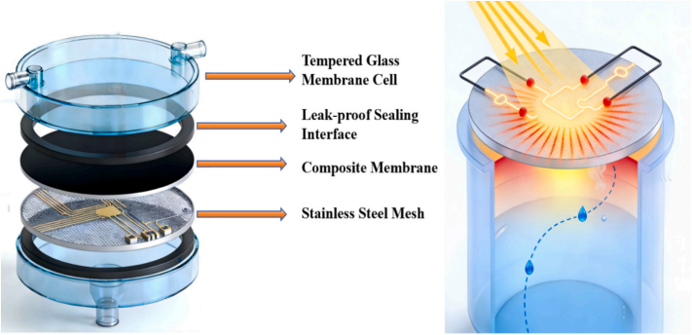
Fig. 1. Schematic diagram of the Joule heating assisted photothermal PV device.
附件下载:
 86-991-3835823
 lhszhb@ms.xjb.ac.cn
 86-991-3838957
 40-1 Beijing Nan Road, Urumqi, Xinjiang, 830011, China


Copyright @ Xinjiang Techinical Institute of Physics and Chemistry, Chinese Academy of Sciences. All Rights Reserved
